Your car's HVAC system has to do more than blow cold air in summer. It also controls heat, airflow, windshield defrosting, and where air comes out of the vents. When one part starts failing, you may notice the cabin never quite reaches the temperature you want, the windows take longer to clear, or airflow changes for no obvious reason.
Some HVAC problems are seasonal, but many can bother you throughout the year. A weak blower in August can also leave you with poor defrosting in January. The way the temperature, airflow, and vent controls behave helps us narrow down which part of the system needs attention.
1. Low Refrigerant Can Leave the A/C Weak
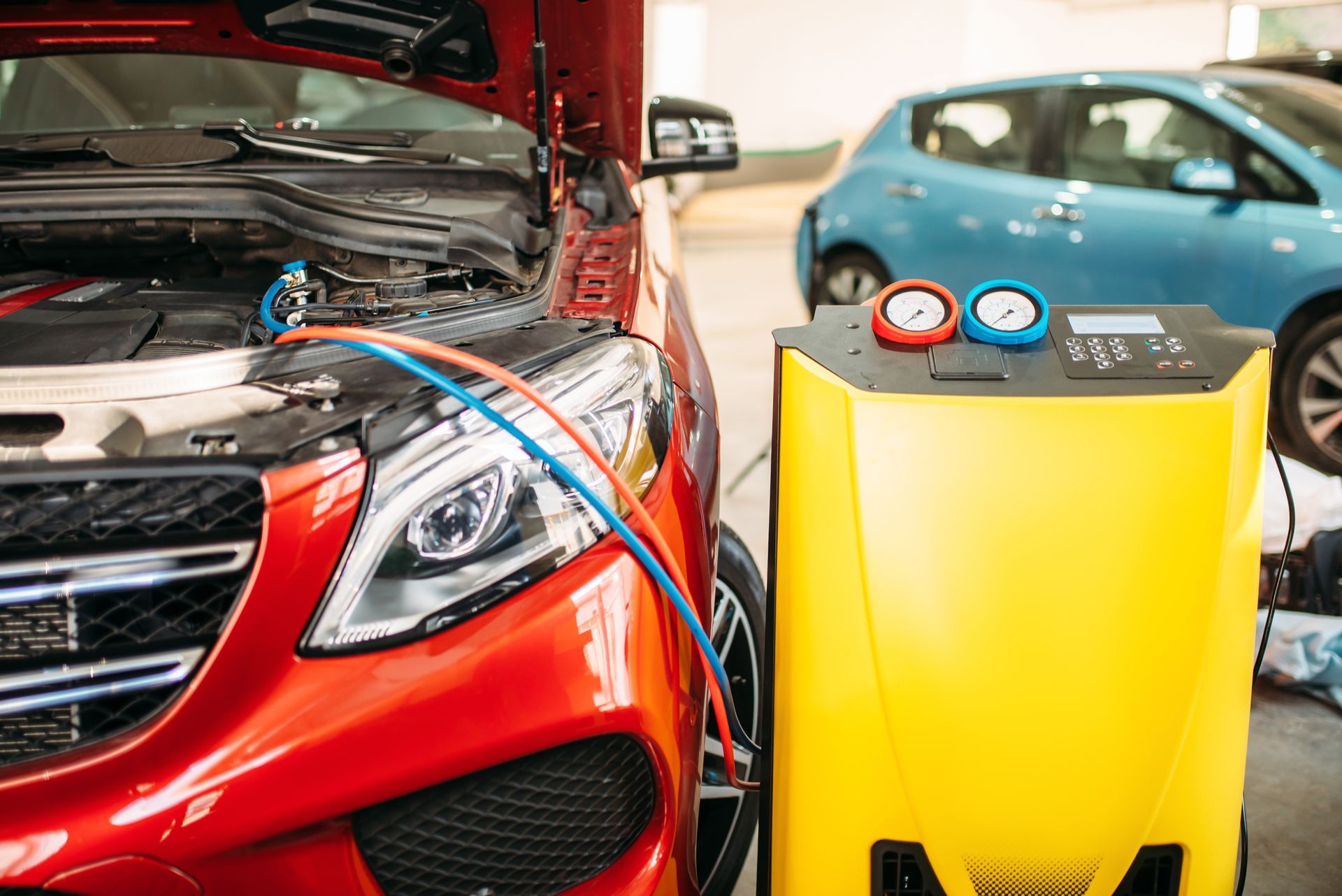
The air-conditioning system needs the correct amount of refrigerant to absorb heat from the cabin. When refrigerant gets low, vent temperature may start cool and then turn warmer, or the A/C may struggle most when the weather is hot.
Refrigerant does not get used up like engine oil. If the charge is low, we look for a leak rather than simply adding more and sending the car back out. Hoses, seals, condensers, compressors, and evaporators can all leak. At our shop, we check system pressures and temperatures along with the refrigerant level so we know whether low charge is actually the reason for poor cooling.
2. A Weak Blower Motor Reduces Airflow
The blower motor pushes heated or cooled air through the vents. When it starts to wear out, airflow can weaken even though the A/C evaporator or heater core is reaching the correct temperature.
You may also hear chirping, squealing, or rubbing from behind the dashboard. Some blower motors stop working at certain speeds or need a bump in the road before they start again. If airflow is weak on every vent setting, we check the motor, electrical supply, cabin air filter, and airflow path instead of assuming there is a refrigerant problem.
3. Blend Door Problems Give You the Wrong Temperature
Inside the HVAC housing are small doors that direct air through different passages. A blend door controls how much air moves across the heater core versus the colder side of the HVAC case.
If the door sticks or its actuator fails, the temperature at the vents may not match what you selected. One side of a dual-zone system might blow warm while the other stays cold. You may also hear repeated clicking from behind the dashboard when you change the temperature setting.
During an inspection, we check whether the actuator is receiving commands and whether the door is actually moving. Replacing the control panel will not help if a broken door inside the HVAC housing is the real problem.
4. A Clogged Cabin Air Filter Can Choke Off Airflow
The cabin air filter traps dust, pollen, leaves, and other debris before outside air enters the passenger compartment. As it fills, the blower has to push air through more resistance.
A badly restricted filter can cause:
- Weak airflow from multiple vents
- Longer windshield defrosting time
- More blower noise with less air movement
- A stale or dusty smell from the vents
- Poor heating or cooling even with the fan on high
Replacing the filter is straightforward on many vehicles, but we also look for leaves or debris in the filter housing. Installing a clean filter over a pile of material in the air inlet will not restore full airflow.
5. Cooling System Problems Can Reduce Cabin Heat
Your heater depends on hot engine coolant. Coolant flows through the heater core, and the blower pushes air across that heat exchanger before sending it into the cabin.
Low coolant, a thermostat stuck open, restricted heater core passages, or a coolant-control valve problem can leave the vents lukewarm. You might notice the engine temperature gauge stays lower than normal or the heat improves only when driving faster.
We check engine operating temperature along with heater hose temperatures before blaming the heater core. If the engine isn't getting warm enough, replacing HVAC components inside the dashboard would miss the real cause.
6. Airflow Door or Control Problems Can Hurt Defrosting
The HVAC system also controls where the air goes. Mode doors route airflow toward the dashboard vents, floor outlets, or windshield. If one of those doors sticks, you can have plenty of air but very little reaching the area you selected.
This becomes especially noticeable when you need the windshield to clear quickly. A failed mode actuator can leave air blowing from the floor when you have selected defrost. Electrical control faults can create similar behavior on vehicles that use electronic HVAC modules.
Regular maintenance gives us opportunities to catch dirty filters, low coolant, and developing A/C performance problems before you need maximum heating or cooling. Changes in airflow direction, unusual clicking, or a fan that works only sometimes are worth checking before the system stops responding altogether.
Get Automotive HVAC Repair In San Luis Obispo, CA, With Morin Brothers Automotive
If your car is not cooling, heating, defrosting, or moving air the way it should, Morin Brothers Automotive in San Luis Obispo, CA, can check the A/C, heater, blower system, filters, and HVAC controls to find what is affecting cabin comfort.