Your car’s air conditioning may blow cold while you are moving, then become noticeably warmer when you stop at a traffic light. Once the vehicle begins moving again, the air from the vents cools down. That pattern usually means the A/C system is struggling with airflow, refrigerant pressure, compressor operation, or excess heat around the condenser.
Driving forces outside air through the front of the vehicle, which helps the air conditioning system release heat. When the car stops, electric cooling fans must provide that airflow. If a component is weak, the difference between driving and idling can expose it quickly.
Moving Air Helps The A/C Release Heat
The A/C system does not create cold air directly. It removes heat from the cabin and releases that heat through the condenser, which is mounted near the radiator. Air must pass across the condenser fins so the hot refrigerant can cool and change pressure before returning through the system.
At road speed, plenty of air moves through the grille and across the condenser. While stopped, that natural airflow disappears. The system then depends on one or more electric fans to move air through the condenser and radiator. If those fans are not doing their job, vent temperature can rise within a few minutes.
A Weak Cooling Fan Is A Common Cause
Electric cooling fans may fail because of a worn motor, damaged relay, blown fuse, faulty control module, wiring problem, or incorrect temperature signal. Some vehicles use multiple fans or several fan speeds. One speed may stop working while the fan still runs under certain conditions, making the problem less obvious.
A technician will check whether the fan starts when the A/C is turned on and whether its speed changes as refrigerant pressure rises. A fan that turns slowly may look functional but still fail to move enough air. The engine temperature may also rise in traffic if the same fan supports both the radiator and A/C condenser.
Low Refrigerant Can Make Cooling Inconsistent
Refrigerant carries heat through the A/C system. When the charge is low, the system may continue producing cool air under favorable conditions but struggle at idle or during hot weather. The compressor may cycle frequently, and vent temperature may change as engine speed rises and falls.
Refrigerant does not get used up during normal operation. A low charge means there is likely a leak from a hose, seal, condenser, compressor, evaporator, or service connection. Adding refrigerant without locating the leak can provide only temporary improvement and may lead to an incorrect charge level.
The Compressor May Perform Better At Higher RPM
The A/C compressor circulates refrigerant and builds the pressure difference needed for cooling. A worn compressor may move enough refrigerant when the engine is turning faster but produce weak pressure at idle. Internal wear, a slipping clutch, a faulty control valve, or an electrical concern can all affect output.
Some modern vehicles use variable-displacement compressors that do not cycle on and off in the traditional way. Their output is controlled electronically. Testing may require pressure readings, scan data, voltage checks, and temperature measurements to determine whether the compressor is being commanded correctly and responding as expected.
Condenser Problems Can Trap Too Much Heat
The condenser sits at the front of the vehicle, where it collects dirt, leaves, insects, and road debris. Bent fins or material packed between the condenser and radiator can reduce airflow. The A/C may still cool while driving because higher air pressure forces enough air through the restricted area, but it may lose performance while stopped.
Internal condenser restrictions can also interfere with refrigerant flow. In addition, an overheating engine can increase temperatures around the A/C system and reduce cooling ability. An inspection should include the condenser surface, radiator area, cooling fan operation, and engine temperature rather than focusing only on the refrigerant charge.
Clues That Help Identify The Problem
The conditions under which the A/C becomes warm can provide useful direction. Notice whether the change happens only during long stops, immediately after the vehicle stops moving, or mainly during the hottest part of the day.
- The vent air becomes cold again as soon as speed increases.
- The engine temperature rises while sitting in traffic.
- The cooling fan is unusually loud, weak, or silent.
- The A/C cycles on and off every few seconds.
- A rattling or squealing sound begins when the A/C is switched on.
- Cooling is weak at all speeds but worse while stopped.
These observations help separate an airflow concern from low refrigerant, compressor wear, or an electrical control problem. Avoid placing your hands near a cooling fan because electric fans can start without warning, even when the engine is not running.
How Technicians Test A/C Performance
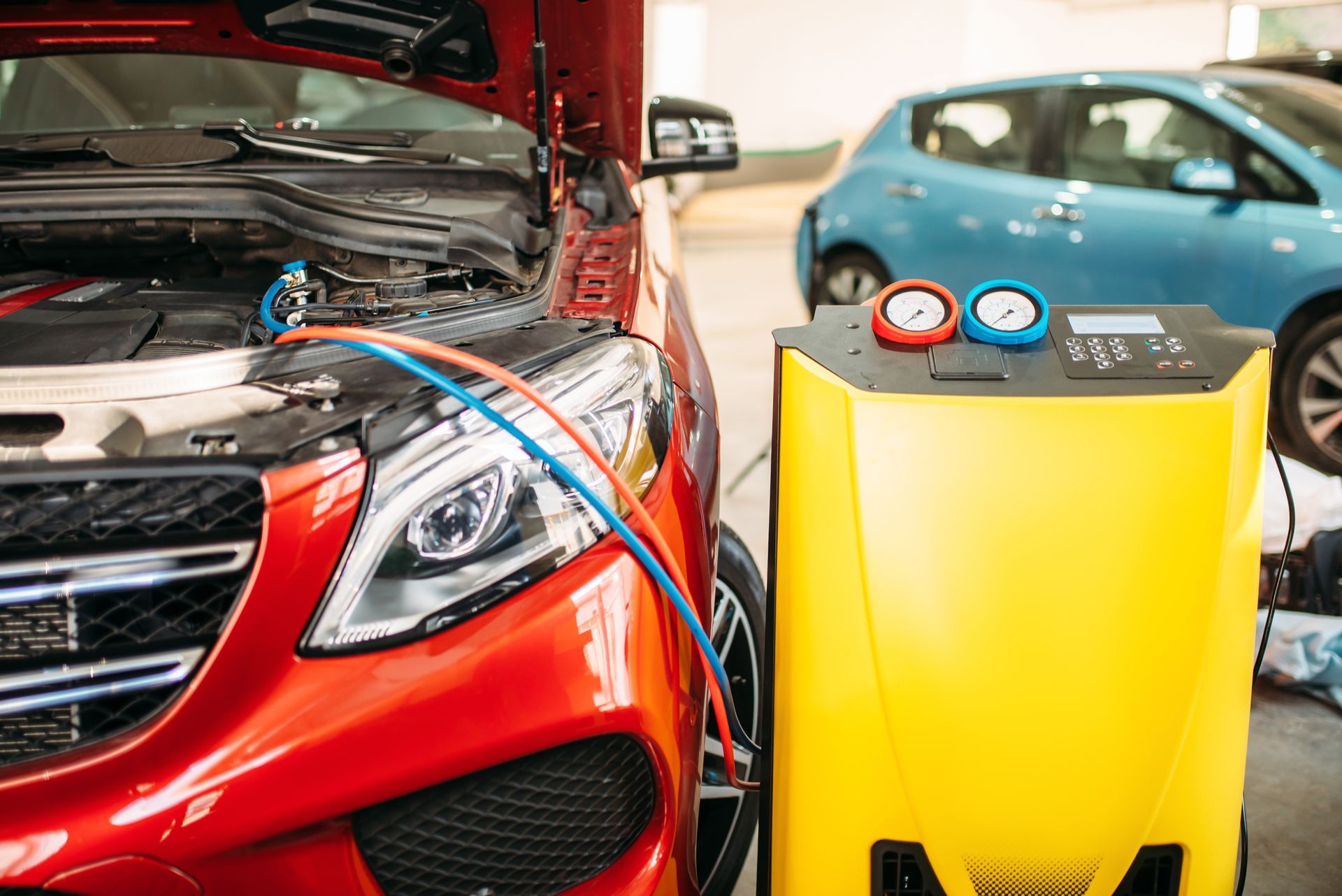
Diagnosis begins by measuring vent temperature and comparing performance at idle and at a higher engine speed. The technician may monitor high-side and low-side refrigerant pressures, cooling fan commands, outside temperature, evaporator temperature, and compressor operation.
The system can then be checked for leaks, restricted airflow, damaged wiring, and signs of incorrect refrigerant charge. Regular maintenance can reveal leaves blocking the condenser, worn belts, or damaged electrical connections before cooling performance drops. Accurate testing is important because adding refrigerant will not repair a weak fan or failing compressor.
Get A/C Repair In San Luis Obispo, CA, With Morin Brothers Automotive
If your car’s A/C blows cold while driving but becomes warm when you stop, Morin Brothers Automotive in San Luis Obispo, CA, can test the cooling fans, refrigerant pressures, compressor, condenser, and electrical controls.